
Steaming Handspun | How to Finish & Set Yarn Twist
Posted by Kelly Holtsclaw on Dec 31st 1969
The Ultimate Guide to Steaming Handspun Merino Yarn
Your complete reference for getting that perfect, puffy bloom every time.
If you're a handspinner, you know the moment. You take a freshly spun skein of merino, give it a gentle kiss of steam, and—*poof*—it transforms. That tight, noodle-y yarn relaxes and breathes, blooming into a soft, lofty cloud that’s begging to be knit. It feels like a magic trick, but it’s actually a beautiful bit of fiber science you can master.
This is your deep-dive guide. We'll go beyond the "what" and get into the "how" and "why" of steaming. Looking for the quick-start version? You can find our simple 60-second guide right here.
The First Step: How to Finish Handspun Yarn
Before you can use that beautiful skein, you need to "finish" it. This is the crucial step you take after spinning to prepare your yarn for its new life as a hat or scarf. The whole point of finishing is to even out the tension and learn how to set the twist in yarn so it doesn't try to untwist itself in your project. Steaming is one of the most popular and effective methods for finishing, especially with a lofty wool like merino.
Why Does Merino "Puff Up" With Steam?
That glorious bloom comes from a team of three things working together: the fiber's structure, its twist, and a little help from heat and moisture.
- The Merino Crimp: Think of a merino fiber like a tiny, coiled spring. It’s packed with natural crimp. When you spin it, you're temporarily pulling that spring straight. Steam gives the fiber permission to relax and bounce back to its springy, voluminous state.
- The Hydrogen Bond "Reset": This is the key to understanding how to set yarn after spinning. When you steam yarn, the water molecules get the fiber's own hydrogen bonds to let go. As the yarn cools and dries, they grab on again in a new, relaxed position. This is what "sets the twist"—it's like telling your yarn, "Okay, this is your new shape. You can relax now."
- The "Scale" Factor: Wool fibers are covered in microscopic scales. With gentle steam (and no rubbing!), these scales can relax and settle next to each other, making the yarn appear fuller without actually felting.
The Spinner's Toolkit: Choosing Your Steaming Method
You don't need fancy equipment. Your best tool is probably already in your kitchen or laundry room. Each has its pros and cons.
- 1. The Tea Kettle or Pot-on-the-Stove Method
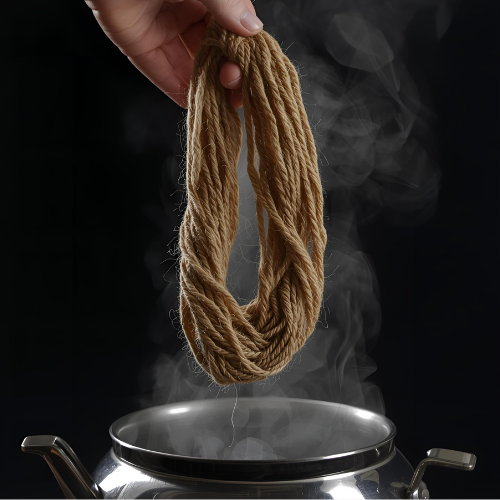
- How: Bring a kettle or pot of water to a boil. Hold your skein (carefully!) in the plume of steam. A metal colander placed over a pot works beautifully to hold the skein safely.
Pros: Free, easy, and produces lots of steam.
Cons: Risk of burns is higher. You have to be very careful to keep your hands and the yarn out of the boiling water. - 2. The Garment Steamer Method
- How: Hang your skein from a hanger or doorknob and pass the steamer head over it.
Pros: Excellent control, designed for this exact purpose, and very safe.
Cons: You have to own one! - 3. The Steam Iron Method
- How: Set your iron to its highest steam setting. Hold it vertically and use the "steam burst" function, keeping it several inches away from the hanging skein. Never let the hot plate touch the yarn.
Pros: Most people have an iron. Good for targeted bursts of steam.
Cons: Clunky to hold, and it's easy to get too close. The risk of scorching the yarn is real.
How do you steam handspun yarn for knitting?
This step-by-step process is the most straightforward way for how to set twist in handspun yarn and get it ready for your needles.
- Secure Your Skein: Use 3-4 figure-eight ties made from scrap yarn. Why figure-eights? They create a loose loop that allows the yarn to fluff up and shift without becoming a tangled mess.
- Choose Your Method & Location: Set up your kettle, pot, or steamer. Hang the skein so it can dangle freely.
- Apply Steam Gently: Hold the steam source 6-10 inches away from the yarn. You're giving it a sauna, not a pressure wash. Slowly rotate the skein, making sure every part gets a light waft of steam for about 30-60 seconds total.
- Hands Off While Hot!: This is the most important rule. While the yarn is hot and wet, its scales are open and vulnerable. Squeezing, rubbing, or wringing it now is a one-way ticket to a felted brick. Let it be!
- Let it Cool and Dry Completely: Let the skein hang until it is 100% cool and dry to the touch. This allows those hydrogen bonds to lock in their new, relaxed position.
Troubleshooting Common Issues
- "My yarn is still twisted and kinky!" Your yarn was likely very "energized" or overspun. Steam is a light finish. For high-energy yarns, a full wet finish (soaking the yarn in lukewarm water for 20 minutes) is a better choice.
- "My yarn looks limp and lifeless." You may have over-steamed it. Too much heat and moisture can relax the yarn too much, causing that springy crimp to go limp. Next time, use less steam and hold it further away.
- "Oops, I think I felted it." If it's stiff and the strands are fused, you likely got it too wet and agitated it while hot. Remember to keep a safe distance and never squeeze or rub the skein during the process.
Perfect Practice Fiber: Malabrigo Nube
Want to perfect your technique on a forgiving and utterly gorgeous fiber? Grab some Malabrigo Nube roving. Its merino softness and stunning hand-dyed colors make for a fantastic spinning experience, and it blooms beautifully every time.
No Time to Spin?
If you love the look but are short on time, you can always explore my collection of unique, ready-to-knit handspun yarns.